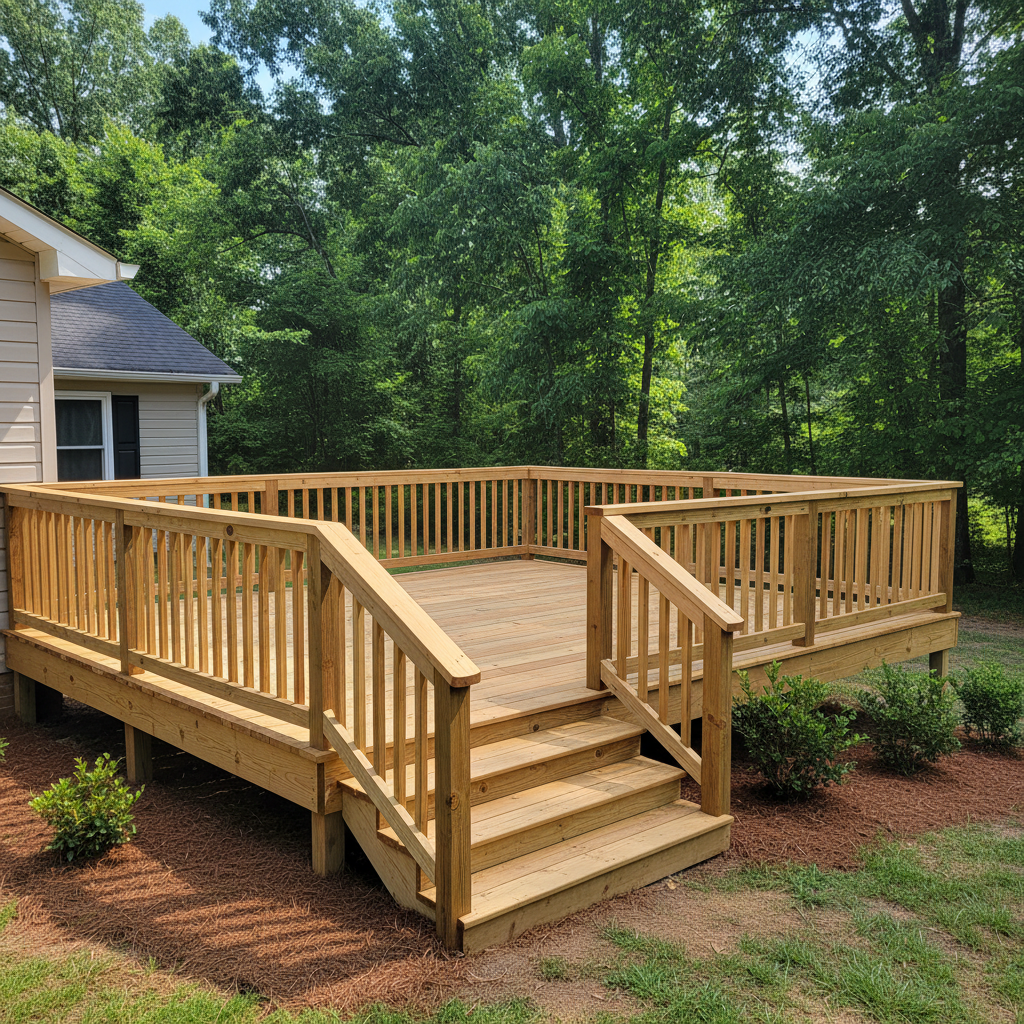
Alright, let's get straight to it. You're probably here because you're wondering what a new deck is going to set you back. It's one of the first questions folks ask me, and it's a good one. Nobody wants to be surprised, especially when it comes to a big project like adding outdoor living space to your home.
What Really Drives Deck Prices?
Look, I can't give you a single number for every deck, because every project is different. It's like asking how much a car costs – depends if you want a pickup or a sports car, right? But I can tell you what factors have the biggest impact on the final price tag:
- Size and Shape: This is probably the biggest one. A small, simple 10x10 square deck is going to be a lot cheaper than a sprawling, multi-level design that wraps around your house. More square footage means more materials and more labor. Complex shapes with angles, curves, or bump-outs also add to the cost because they require more precise cuts and often create more waste.
- Materials: Here's where you see a huge swing. Pressure-treated pine is your most budget-friendly option. Composite decking, like Trex or Fiberon, costs more upfront but lasts longer and needs less maintenance. Then you've got hardwoods like ipe or cedar, which are beautiful but definitely on the high end. Railing materials also play a part – basic wood pickets versus aluminum balusters or even glass panels.
- Height and Foundation: Is your deck going to be low to the ground, maybe just a foot or two up? Or are we talking about a second-story deck that needs serious support and maybe even a spiral staircase? Higher decks require more robust footings, taller posts, and often more complex framing, all of which add to the labor and material costs. Here in Clio, especially in some of those older neighborhoods where the ground can be a bit soft after a good rain, we sometimes have to go deeper with footings to make sure everything's solid.
- Features and Accessories: Want built-in benches? A pergola? Custom lighting? An outdoor kitchen area? These are all fantastic additions that really make a deck shine, but they're extra. Think of them as upgrades – they add value and enjoyment, but they also add to the bill.
- Site Prep and Accessibility: Sometimes, getting to the build site is a nightmare. If we have to haul materials a long way, clear a bunch of brush, or deal with a really sloped yard, that's going to factor into the labor hours.
Typical Deck Cost Ranges in Clio, AL
Okay, you want numbers. I get it. Based on what I've seen in the Clio area, here's a general breakdown. Remember, these are rough estimates, and your specific project could be higher or lower.
- Basic Pressure-Treated Pine Deck: For a simple, ground-level or low-height deck (say, 150-250 sq ft), you're probably looking at anywhere from $30 to $45 per square foot. This would include standard wood railings. So, a 200 sq ft deck might run you $6,000 to $9,000.
- Mid-Range Composite Deck: If you're going with a good quality composite material, maybe a bit more complex design or a slightly elevated structure (200-400 sq ft), expect to pay around $55 to $80 per square foot. This often includes composite railings or aluminum balusters. A 300 sq ft composite deck could be $16,500 to $24,000.
- High-End Composite or Hardwood Deck: For larger, multi-level designs, premium composite or exotic hardwood, custom features, and elaborate railings, prices can easily jump to $85 to $120+ per square foot. These are the decks that become true outdoor living rooms, often 400+ sq ft. A 500 sq ft high-end deck could be $42,500 to $60,000 or more.
These prices generally include materials, labor, and standard permitting fees. Always get a detailed quote, which we'll talk about next.
What Should Be in Your Deck Quote?
When Paradise Deck Solutions gives you a quote, or any reputable builder for that matter, it shouldn't just be a single number. You need to see the breakdown. Here's what a good quote will include:
- Detailed Scope of Work: Exactly what's being built. Dimensions, number of levels, type of stairs, railing style, etc.
- Material Specifications: The exact type of decking (e.g., "Trex Select Pebble Gray"), framing lumber (e.g., "Pressure-Treated Southern Yellow Pine #2"), fasteners, and any specific hardware.
- Labor Costs: This might be a lump sum or broken down by phase.
- Permit Fees: Who's responsible for pulling them and if they're included.
- Site Preparation: Any demolition, clearing, or grading that needs to happen.
- Cleanup and Debris Removal: Make sure they're not leaving you with a pile of sawdust and old lumber.
- Payment Schedule: How and when payments are due.
- Warranty Information: What's covered and for how long.
- Timeline: A projected start and completion date.
If a quote is vague or just a handwritten number on a napkin, that's a red flag. You want clarity.
How to Avoid Overpaying for Your Deck
Nobody wants to feel like they got ripped off, especially on a home improvement project. Here's my advice:
- Get Multiple Quotes: This is basic, but so many folks skip it. Don't just get one quote and run with it. Get at least three detailed quotes from different, reputable builders. This helps you compare not just price, but also what's included and the builder's approach.
- Be Specific About What You Want: The more detailed you are with your vision, the more accurate the quotes will be. If you just say "a deck," you're going to get a wide range of prices because each builder will be guessing at your expectations. Show pictures, draw sketches, point out features you like.
- Understand the Materials: Don't just pick the cheapest option without understanding why it's cheap. Pressure-treated pine is great, but it needs more maintenance than composite. Factor in the long-term costs of sealing, staining, or replacing boards. Sometimes paying a bit more upfront saves you a lot of hassle and money down the road.
- Check References and Reviews: A low bid from a shady builder isn't a deal; it's a headache waiting to happen. Call their past clients. Look at their work. Make sure they're licensed and insured.
- Don't Be Afraid to Ask Questions: If something in the quote doesn't make sense, ask! A good builder will be happy to explain everything. If they get defensive or vague, that's another red flag.
- Beware of "Too Good to Be True" Deals: If one quote is significantly lower than all the others, there's usually a reason. Maybe they're cutting corners on materials, don't have proper insurance, or are just inexperienced. You don't want to be their learning curve.
Building a deck is an investment in your home and your lifestyle. Do your homework, ask the right questions, and you'll end up with a beautiful space you can enjoy for years without feeling like you broke the bank. If you're in the Clio area and thinking about a deck, give us a call at Paradise Deck Solutions. We're always happy to talk through your ideas and give you an honest assessment.