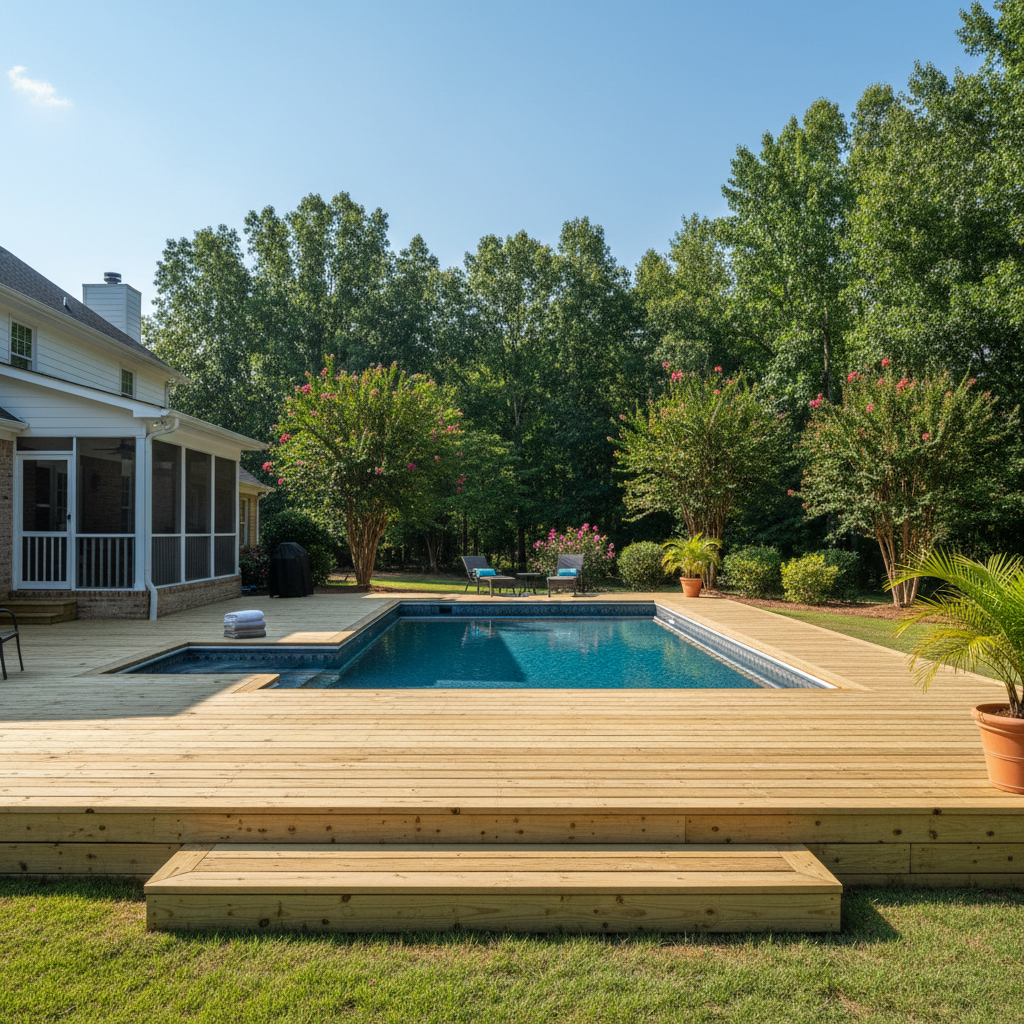
Alright, let's talk pool decks here in Clio. You've got that beautiful backyard oasis, and you want to make sure the deck around it stays looking good and is safe for everyone. It's not just about building it; it's about building it smart and keeping it up, especially with our wild Alabama weather.
When's the Best Time to Build or Renovate Your Pool Deck?
This is probably the number one question I get asked. Everyone wants their deck ready for summer, right? So, naturally, folks start thinking about it in spring. But here's the kicker: if you wait until April or May to call, you're already behind the curve for a summer completion. Good builders, like us at Paradise Deck Solutions, are usually booked out a few months.
My advice? Start thinking about it in the fall. September, October, even November. That's when you should be getting quotes and locking in your builder. Why then? Well, for one, you avoid the mad rush. You'll likely get more attention from contractors, and we're not scrambling to squeeze you in. Plus, the weather's often more cooperative for construction – a real bonus!
Winter can be okay too, especially if it's a mild one. We don't get super harsh winters here in Clio, but you do run the risk of cold snaps or extended rainy periods that can delay things. Concrete needs specific temperatures to cure properly, and nobody wants to install composite or wood in freezing rain. So, fall gives you a good window before the real cold sets in, or you can aim for late winter/early spring to beat the summer rush.
How Our Clio Weather Impacts Deck Work
Our local climate here in Southeast Alabama, especially with that red clay soil we've got around Clio, really dictates how and when we can work. You can't just pour concrete whenever you feel like it, after all.
- Rain: This is a big one. You can't pour concrete in the rain, obviously. It washes out the mix and weakens the slab. Even for wood or composite, working on a muddy site is slow, messy, and can be dangerous. We need dry conditions for excavation, framing, and especially for any finishing work. Those pop-up summer thunderstorms can really throw a wrench in a schedule, so building in drier seasons helps us avoid those headaches.
- Temperature: Concrete needs to cure at certain temperatures. Too hot, and it dries too fast, leading to cracks. Too cold, and it doesn't gain strength properly. We're usually looking for daytime temps consistently above 40-50 degrees Fahrenheit for concrete work. For wood and composite, extreme heat can make materials expand, and extreme cold makes them contract, which can affect how they're cut and installed.
- Humidity: High humidity, which we get plenty of, can slow down drying times for stains, sealers, and paints. It's not a deal-breaker, but it means we have to factor in longer waits between steps.
So, planning your project outside of the peak summer heat and the wettest spring months gives everyone a better experience and a better final product.
Protecting Your Pool Deck Investment Year-Round
You've spent good money and time on your pool deck, so you want it to last. Here's how to keep it in top shape, no matter the season:
- Regular Cleaning: This is huge. Pool chemicals, sunscreen, food spills, and just plain dirt can build up. For composite decks, a good scrub with mild soap and water usually does the trick. For wood, you might need a deck cleaner specifically designed for wood. Don't use a super high-pressure washer on wood; it can damage the fibers. Even concrete can get slick with algae if not cleaned regularly.
- Inspect for Damage: Do a quick walk-around every few months. Look for loose screws, splinters (on wood), cracks, or any signs of rot or insect damage. Catching these early can save you a big repair bill down the line. Check the ledger board where the deck meets your house too – that's a common spot for water intrusion if not properly flashed.
- Sealing and Staining (for Wood Decks): This is critical for wood. Our sun and humidity will beat up an unsealed deck fast. Depending on the product, you'll need to clean and reseal or restain every 1-3 years. This protects the wood from moisture, UV rays, and helps prevent rot and warping. Composite decks don't need this, which is one of their big advantages.
- Winterization: While we don't typically get heavy snow, freezing temperatures do happen. Make sure your pool equipment is properly winterized, and any deck furniture is stored or covered. Clear off any standing water, especially if it's going to freeze, as ice expansion can cause damage.
- Trim Overhanging Branches: If you have trees over your deck, keep those branches trimmed. Not only does it reduce leaf litter, but it also prevents branches from falling and damaging your deck during a storm.
Taking a little time throughout the year to maintain your pool deck will pay off big time. It'll keep it looking great, extend its life, and ensure it's a safe, enjoyable space for your family and friends for years to come. If you've got questions about your specific deck or need a hand with maintenance, don't hesitate to reach out. We're always happy to help our neighbors here in Clio.